
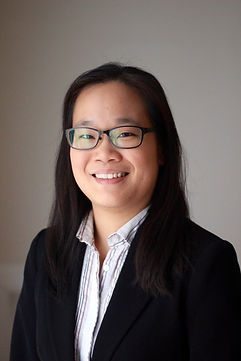
Li Yenn Yong
BMRF Research Fellow 2018/19
Project: "Tissue engineering of small blood cells"
Engineering blood vessels to support implanted tissue and organ models
Each year, millions of reconstructive procedures are carried out to restore tissue lost through trauma, cancer, or surgery. While progress in tissue engineering has been significant, one major hurdle remains: without a blood supply, implanted tissue can't survive. This project focused on how to engineer small blood vessels that can integrate with the body and keep new tissue alive.
What this fellowship set out to explore
With support from a Blond McIndoe Surgical Research Fellowship, plastic surgery trainee Li Yenn Yong joined a team at the University of Manchester to explore how to encourage blood vessel growth into engineered tissues.
Using an animal model called an arteriovenous loop (AVL) — which connects an artery to a vein to create a high-flow environment — the team tested how different bioengineered materials might promote vessel growth. They also developed patterned hydrogels with hollow channels to guide the formation of new blood vessels.
The work took place at the Henry Royce Institute and the Blond McIndoe Laboratory, and combined microsurgery, live imaging, 3D bioprinting, and stem cell science.
What the team found
-
By using a sacrificial printing method, the team was able to create hollow channels in gel-based materials and seed them with cells, thereby initiating the formation of blood vessels.
-
Blood flow was demonstrated within new vessels formed in the AVL model, and imaging techniques were optimised to visualise these in thick tissue samples.
-
Kidney organoids grown from stem cells were successfully implanted into the model to explore whether they could develop their own vascular supply.
Why this matters
This research lays the groundwork for creating engineered tissues that can survive and function after implantation. That’s crucial not just for soft tissue reconstruction in surgery, but also for future organ regeneration and disease modelling.
Printed blood vessels could also be used in organ-on-a-chip systems — lab-grown models that simulate real tissues and are used in drug development and personalised medicine.
The wider impact
This work supports the development of vascularised tissue constructs that could benefit a wide range of medical applications. It also highlights the importance of supporting early-career surgical researchers working at the intersection of surgery and science.
As Li Yenn Yong explains:
“The Blond McIndoe Research Fellowship has given me the confidence to pursue academic research in parallel with my surgical training. Without this funding, I may never have taken the first step towards an academic career.”
Next steps
Li Yenn is continuing this work as part of her PhD. The next phase involves further analysis of the kidney implants and refining 3D bioprinting techniques to more closely mimic the structure of natural blood vessels. The ultimate goal is to create living, vascularised tissue models for testing, transplantation, and surgical reconstruction.